
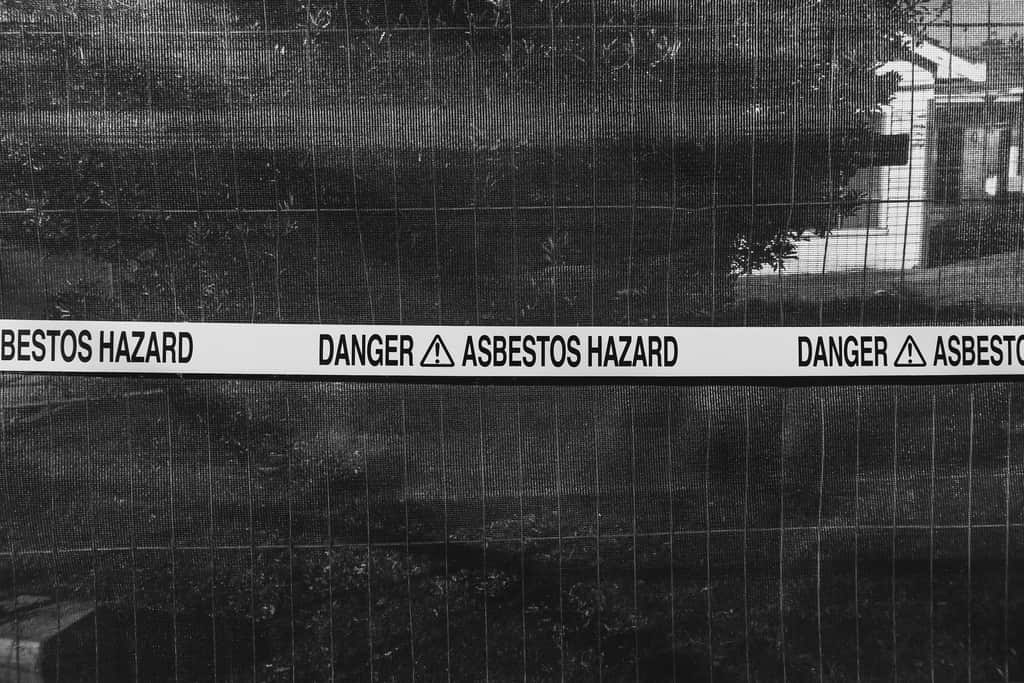
Photo by Sonny Sixteen on Pexels.
Most building work on a London home starts by taking something out: a chimney breast, a partition wall, an old ceiling, a floor, a boiler cupboard. In a house or flat built before 2000, any of those could contain asbestos. HSE’s introduction to asbestos says around 5,000 people die every year in Great Britain from asbestos-related diseases, which typically take decades to develop and cannot be cured. Asbestos was used in buildings until it was banned in 1999, and HSE says buildings constructed after 2000 are unlikely to contain it. That leaves most of London’s housing in scope.
Asbestos that is in good condition and left alone is not usually the danger. The danger is a builder breaking it up without knowing it is there, or knowing and cutting corners. This guide explains what should happen before work starts, what surveys and removal cost, and how to spot the shortcuts. It sits alongside our guides to vetting a building contractor and comparing building quotes like for like.
Who is responsible in a private home?
HSE is clear that contractors working in your home have a legal duty to protect you from risks to your health caused by their work, including asbestos. It also says that homeowners in owner-occupied homes are not engaged in work activity, so they are not legally responsible for risks to contractors. That does not mean you can ignore the issue. HSE’s asbestos FAQ says that if you know where asbestos is in your home, you should tell anyone working there. And if a contractor skips the checks, it is your family breathing the dust.
If you own a flat, the common parts of the building, such as stairwells, plant rooms and shared ceiling voids, are usually managed by the freeholder or managing agent, who has a duty to manage asbestos there. Ask them for their asbestos register before work that touches shared structure.
Where asbestos hides in London homes
HSE’s guidance on finding asbestos says that if a building was built or refurbished before 2000, you should assume asbestos may be present until you know otherwise. Its FAQ lists the common places:
- asbestos cement products such as pipes, flues and roofs;
- lagging on pipes and boilers;
- water tanks and toilet cisterns;
- asbestos insulating board, which closely resembles ordinary plasterboard;
- loose asbestos in ceiling and wall cavities;
- sprayed coatings on ceilings, walls and beams;
- textured decorative coatings, commonly called Artex;
- floor tiles.
You cannot tell by looking. HSE’s FAQ advises against removing asbestos yourself without training and equipment.
Surveys: which one you need before building work
HSE’s guidance on arranging an asbestos survey describes two types. A management survey helps manage asbestos during normal occupation and use of a building. A refurbishment or demolition survey is needed before major works, because it aims to find hidden asbestos in the areas being worked on. HSE says that survey must be done by a competent surveyor, involves destructive inspection, and that the area must be vacated during the survey and confirmed fit for reoccupation afterwards. For building work, the refurbishment or demolition survey is the one that matters, and it should cover every area the builder will disturb.
HSE strongly recommends using a surveyor accredited by the United Kingdom Accreditation Service (UKAS), and says samples must be analysed by an accredited laboratory. Checkatrade’s asbestos survey cost guide (May 2026) puts a management survey for a typical two to three bedroom home at about £150 to £350, and a refurbishment or demolition survey at about £300 to £400. That is a small cost against the price of stopping a job halfway through.
Licensed, notifiable or simple: who may remove it
HSE’s guidance on deciding whether work needs a licensed contractor divides asbestos work into three groups:
- Licensed work, the highest risk, includes any work on sprayed asbestos, most repair or removal of asbestos insulation such as pipe lagging, and most work on asbestos insulating board, such as removing partition walls, linings and suspended ceilings.
- Notifiable non-licensed work includes jobs such as removing asbestos cement that has been broken up, and large-scale removal of textured coatings.
- Non-licensed work covers lower-risk tasks, which still require trained workers and the right controls.
HSE’s page on licensed asbestos work says licensed jobs must be notified to the enforcing authority on form ASB5 at least 14 days before the work starts, and that it is an offence to carry out licensable work without a licence. You can check whether a firm holds a licence using the list of current licensed asbestos contractors published through CONIAC, HSE’s construction advisory committee. A general builder who offers to “just take out” an insulating board partition is offering to commit an offence in your home.
What removal costs
Checkatrade’s asbestos removal cost guide (April 2026) puts typical domestic removal jobs at about £950 to £3,750, says homeowners spend around £1,750 on average, and gives domestic removal at roughly £175 to £350 per m². It puts removing a 20 m² Artex ceiling at about £2,750 to £6,000, and encapsulation, where sound asbestos is sealed instead of removed, at around £33 per m². Prices vary with the material and the access, so ask for an itemised quote that says whether the work is licensed, notifiable or non-licensed, and what air testing and clearance is included.
Disposal: the part cowboys skip
Asbestos waste is hazardous waste. The government’s waste duty of care code of practice says householders must take all reasonable measures to pass their waste only to an authorised person, and that a consignment note is needed to move asbestos, even from a home. Failing to meet the duty of care is a criminal offence, and the code says there is no upper limit on the fine a court can impose. The government’s guidance on household waste fixed penalty notices (updated April 2024) says that where a tradesperson is working on a property, they are responsible for the waste they produce. If you arrange for waste to be taken away yourself, the duty is yours, and councils can issue a fixed penalty with a default of £200. Either way, ask who is removing the asbestos, check the waste carrier’s registration, and ask for the consignment note and receipts. GOV.UK’s page on asbestos in the home explains that your council can tell you how to dispose of asbestos safely. Fly-tipping is a crime, and GOV.UK says convicted fly-tippers can face unlimited fines or up to five years in prison.
Red flags
- “It’s only Artex” or “it’s just old board” with no survey or sample.
- No refurbishment or demolition survey before stripping out a pre-2000 home.
- A general builder offering to remove lagging, sprayed coatings or insulating board.
- No licence number for licensed work, and no ASB5 notice at least 14 days before.
- Dry sweeping, power tools on suspect materials, or debris thrown into an open skip.
- No consignment note, no named waste carrier, or a cheap “we’ll take it away” offer.
A short plan that saves time and money
If your home was built before 2000, get a refurbishment or demolition survey of the areas being worked on before you collect final building quotes. Send the survey report to every bidder so they price the same scope, and ask for asbestos work to be priced and programmed as a separate stage. If removal is needed, check the licence where required, the notification, the clearance and the disposal paperwork before the builder starts. It can feel like a delay, but finding asbestos halfway through a job usually costs far more in time and money.
For the wider picture, see our guides to structuring a home project and paying a builder safely, the services page and our common questions. When you are ready, you can send a free enquiry. Sources were checked on 2 November 2026.
Quick answers
Does my London home have asbestos?
If it was built or refurbished before 2000, HSE says to assume asbestos may be present until a survey shows otherwise. Common places include pipe lagging, insulating board, textured coatings such as Artex, cement roof sheets and old floor tiles.
Which asbestos survey do I need before building work?
A refurbishment or demolition survey of the areas being worked on. HSE says it involves destructive inspection, must be done by a competent surveyor, and recommends UKAS accreditation. Checkatrade’s May 2026 guide puts it at about £300 to £400 for a typical home.
Can my builder remove asbestos?
Only lower-risk materials, and only with training and controls. HSE says sprayed coatings, most lagging and most insulating board work need an HSE-licensed contractor, notified at least 14 days before. Doing licensable work without a licence is an offence.